When you’re choosing a Chesterfield sofa, the details matter.
One detail that often catches buyers off guard is tufting style — specifically, whether to go button-tufted or blind-tufted.
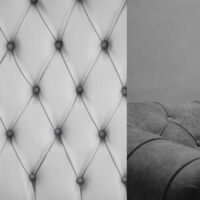
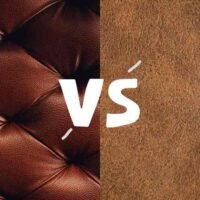
Button tufting has visible buttons at each tufting point, creating a bold, deeply defined diamond pattern. Blind tufting uses the same technique but hides the button, leaving a clean dimple and a smoother, more contemporary finish.
Both are beautiful. Both are handcrafted. But the right choice depends on your interior, your leather colour, and how you want the piece to live in your home.
At Classic Chesterfield, we get this question from Australian buyers constantly. This guide covers everything you need to choose with confidence.
What Is Button Tufting?
Button tufting is the original Chesterfield upholstery technique.
An upholsterer drives a needle and thread through the leather and padding beneath. A small fabric-covered or leather-covered button is then secured at each tufting point on the face of the sofa.
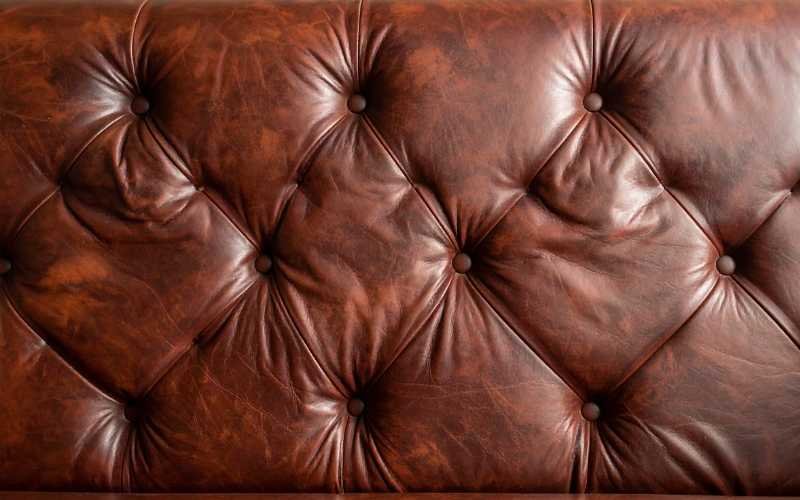
Each button sits recessed into the material. This pulls the surrounding leather into the classic diamond pattern the Chesterfield is known for.
Done properly, this is slow, precise, hand work. Every button must be placed at exactly the right depth and tension. Too loose and the diamonds flatten. Too tight and the leather creases or tears.
How It’s Made
- A grid of tufting points is marked across the upholstery
- A long needle pulls thread through the leather and foam at each point
- A button is tied off at each point on the face of the sofa
- Tension is adjusted by hand until each diamond sits evenly
What It Looks Like
The result is bold and three-dimensional.
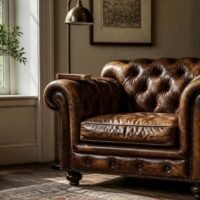
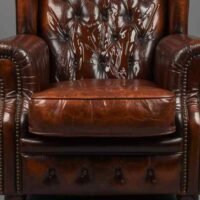
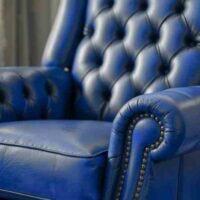
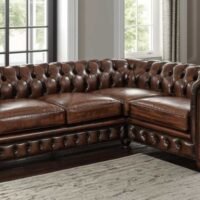
You get deep, pronounced diamond shapes across the back, seat, and arms. The buttons are visible — small, neat, and evenly spaced at the centre of each diamond.
The surface catches and plays with light as you move around the room. In dark leathers like tan, chestnut, or hunter green, button tufting creates an almost sculptural presence.
This is the look most people picture when they think of a Chesterfield sofa bed.
Best Suited For
Button tufting works best in:
- Traditional and heritage interiors — federation homes, Victorian terraces, and colonial-style Australian homes where period detail is celebrated
- Home libraries and studies — the button-tufted leather sofa has a long association with scholarly, refined spaces
- Statement pieces — when the sofa is meant to anchor the room and command attention
- Dark or rich leather tones — tan, cognac, chestnut, hunter green, and navy all shine with button tufting
What Is Blind Tufting?
Blind tufting uses the same fundamental technique — but without a visible button on the face.
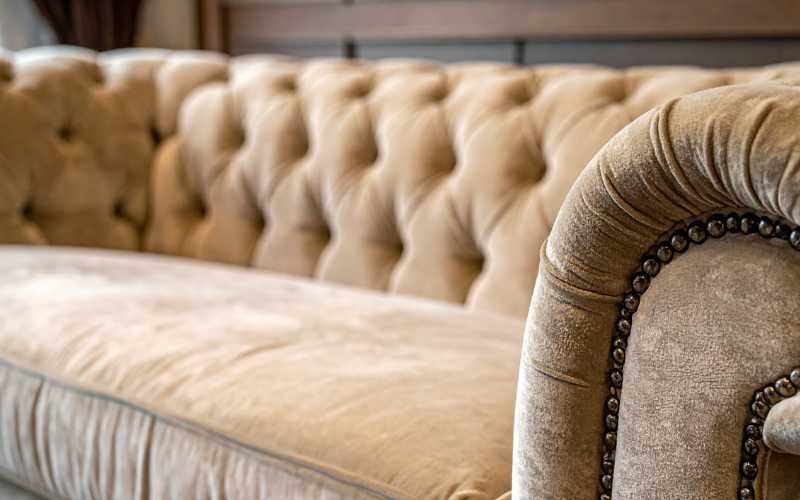
The thread is anchored behind the upholstery instead. This leaves only a clean indent on the surface: a tailored dimple rather than a visible button.
The diamond pattern is still clearly there. But the surface reads smoother and more continuous. There is no hardware on show.
How It’s Made
- The same tufting grid is marked as with button tufting
- Thread is pulled through the leather and foam at each point
- Instead of a button on the face, the thread is secured and hidden behind the upholstery
- The result is a neat dimple on the surface with no visible anchor point
This is actually more technically demanding in some respects. Without a button to conceal the termination point, any variation in tension or placement is immediately visible. The upholsterer’s work must be exact.
What It Looks Like
Blind tufting produces a softer, more refined silhouette.
The diamond pattern is present but quieter. The transitions between panels are smoother. In leather, this creates an almost quilted effect — rich and tactile without being ornate.
It reads as distinctly more contemporary. This is why blind tufting is used frequently in modern interpretations of the Chesterfield — pieces that honour the original form while sitting comfortably in a 21st-century interior.
Best Suited For
Blind tufting works best in:
- Contemporary and transitional interiors — open-plan living areas, Scandi-influenced homes, and spaces that blend old and new
- Architect-designed and minimalist homes — where visual noise is kept low and every element is meant to breathe
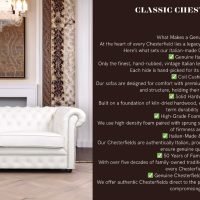
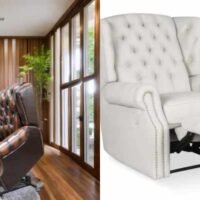
- Light-coloured leathers — white, cream, ivory, and pale grey leather are particularly striking with blind tufting
- Buyers who want the Chesterfield silhouette without a strong period feel
Button-Tufted vs Blind-Tufted: How Do They Compare?
Comfort
This surprises most buyers: button tufting is not uncomfortable.
The buttons are recessed below the surface. The surrounding leather forms a comfortable nest around them. For most adults, sitting on a button-tufted Chesterfield feels no different to sitting on a blind-tufted one.
Blind tufting does produce a marginally smoother sitting surface. If you have specific sensitivities to texture or young children who will be using the sofa heavily, blind tufting removes that variable entirely.
But for the vast majority of buyers, comfort comes down to foam quality and seat depth — not tufting style.
Durability
Both techniques are highly durable on a well-made Chesterfield.
One practical note on button tufting: buttons can occasionally loosen over many years of heavy use. This is a minor issue. A skilled upholsterer can re-tuft a button in minutes. It is a maintenance consideration, not a dealbreaker.
Blind tufting has no hardware to loosen. The thread anchors sit hidden behind the upholstery and are not subject to the same mechanical stress. In that specific respect, it requires slightly lower maintenance.
Cleaning and Maintenance
For leather Chesterfields, cleaning is broadly similar across both styles.
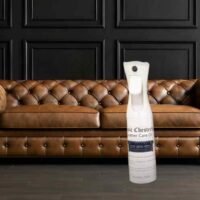
Button tufting requires a little more attention when conditioning. Dust and debris can settle in the folds around each button over time. Use a soft brush or vacuum attachment to clear these areas before applying leather conditioner.
Blind tufting is slightly easier to wipe down quickly. Fewer crevices means less to catch debris. But the dimple points still need regular conditioning to keep the leather supple and prevent cracking at the folds.
For both styles, conditioning every three to four months is the standard recommendation — particularly in Australian climates where UV exposure and low humidity can dry leather out faster than in cooler regions.
Price
The price difference between button-tufted and blind-tufted Chesterfields is minimal.
Blind tufting can be marginally more labour-intensive given the precision required. In practice, what drives cost is leather grade, sofa size, and frame complexity — not tufting style.
Which Tufting Style Works Best With Your Leather?
Your leather choice and tufting style interact more than most buyers realise.
- Full-grain leather develops a natural patina over time. Button tufting amplifies this beautifully. The leather around each button sees slightly different wear and light exposure over the years. The result is a piece that looks genuinely distinguished — lived-in in the best possible way.
- Corrected-grain and pigmented leathers have a more uniform, treated surface. They pair naturally with blind tufting. The consistency of the leather finish complements the cleaner aesthetic of hidden buttons.
- Velvet and fabric Chesterfields suit both techniques. But blind tufting in velvet is particularly striking — the pile catches light differently across the quilted surface, creating a depth that is hard to replicate with any other combination.
What Australian Buyers Are Choosing — and Why
Based on enquiries and orders from customers across Sydney, Melbourne, Brisbane, Perth, and Adelaide, we see clear patterns across homeowners, interior designers, hospitality venues, and commercial fitouts alike.
Button tufting dominates in older residential homes. Federation and Victorian terraces in inner Sydney and Melbourne are ideal for a deeply tufted Chesterfield in dark tan or hunter green leather, which complements the high ceilings, period cornices, and rich timber floors.
It is also the consistent choice for hospitality and commercial spaces that want to project heritage and authority. Think whisky bars, members’ clubs, hotel lobbies, legal or financial offices – places where the visual weight of button tufting supports the ambience the firm is deliberately establishing.
Blind tufting has grown steadily in popularity over the past several years. Contemporary residential builds, boutique hotels, and design-led office fitouts are driving this demand. White and cream leather Chesterfields with blind tufting are among our most requested configurations — they carry the classic Chesterfield silhouette without anchoring the space in a specific era.
Climate is also a quiet factor. In Queensland and Northern Territory particularly, leather in high-UV and humid environments needs regular conditioning regardless of tufting style. Both techniques hold up well in Australian conditions when properly maintained.
How to Choose the Right Tufting Style for Your Home
Run through these four questions:
1. What does your interior look like?
Traditional or period home → button tufting. Contemporary, transitional, or minimalist → blind tufting.
2. What leather colour are you considering?
Dark, rich tones → button tufting lets the colour and patina sing. Light or neutral tones → blind tufting creates elegant, understated depth.
3. Is the sofa a centrepiece or part of an ensemble?
Statement anchor piece → button tufting commands attention. One of several pieces in a composed room → blind tufting integrates without dominating.
4. What matters most in long-term ownership?
A piece that develops character over decades → button tufting. A piece that stays consistently sleek → blind tufting.
There is no wrong answer. Both represent the highest tradition of Chesterfield craftsmanship. The question is simply which fits the room you are building — and the story you want your furniture to tell.
Making the Final Call
Button-tufted or blind-tufted — neither is the wrong choice.
What separates them is not quality. Both techniques represent the same standard of handcraft. What differentiates them is fit — fit with your space, your leather and how you want the piece to be experienced over time.
If your room calls for drama, depth, and a strong period character, button tufting delivers that without compromise. If your space is cleaner or more contemporary, or you want the Chesterfield form without the full traditional weight, blind tufting is your answer.
At Classic Chesterfield, we build all of our sofas to the same level, regardless of tufting type. Solid hardwood frames. Premium leather. Hand-finished detailing. These are the things that determine how a sofa holds up over decades. Tufting style determines how it looks while doing it.
Still not sure which way to go? We’re here to help. Browse our full range of leather Chesterfield chairs and sofas, or get in touch with our team directly. Share a photo of your space, tell us your leather preference, and we’ll point you in the right direction — no pressure, just honest advice from people who know these pieces inside out.
Browse Our Chesterfield Sofa Collection →